

Transitioning a Senior to Assisted Living in Michigan: A Step-by-Step Guide
Moving a loved one into a care facility is one of the most difficult decisions a family will face. According to recent industry data, over 40% of Americans aged 65 and older will require some form of long-term care assistance in their later years. This statistic highlights the growing need for reliable, compassionate support systems across the state. Navigating this transition requires careful planning, emotional sensitivity, and a clear understanding of the available resources in Michigan.
Step 1: Assessing Care Needs and Safety
The first step in the process is an honest evaluation of your loved one's current health and safety. Many seniors resist moving because they fear losing their independence. However, safety must always come first. Look for signs that daily activities have become challenging. These signs include forgetting to take medication, difficulty with bathing or dressing, and frequent falls.
Assisted living is designed for individuals who need help with Activities of Daily Living (ADLs). Assisted living is a residential care option that provides housing, personal support services, and health-related services. If your parent can no longer live alone safely, it is time to consider professional care. Do not wait for a medical crisis to make this decision. Proactive planning reduces stress for everyone involved.
Step 2: Researching Michigan Care Options
Michigan offers a variety of care models, from large institutional facilities to small, home-like environments. It is crucial to understand the difference between a nursing home and an assisted living home. Nursing homes provide intensive medical care for those with severe health conditions. Assisted living homes offer a more residential atmosphere with 24-hour supervision and assistance.
For families in Oakland County, small group homes are often preferred for their personalized attention. Small group homes are licensed residential facilities that house a limited number of residents to ensure consistent, high-quality care. These homes often have a maximum of six residents, allowing caregivers to build strong, trusting relationships with each individual. This model is particularly effective for seniors with memory loss or dementia.
Start your research by looking for facilities that specialize in the specific needs of your loved one. If memory care is required, ensure the facility has specialized training and secure environments. You can find reputable providers by visiting senior care resources in Michigan to compare local options.
Step 3: Touring and Evaluating Facilities
Once you have a list of potential facilities, schedule tours. Do not rely solely on online photos. Visit in person to observe the atmosphere. Look for cleanliness, safety features, and the general mood of the residents. Are they engaged? Do they seem happy? The staff's demeanor is also a critical indicator of quality.
Ask specific questions during the tour. Inquire about staff-to-resident ratios, medication management protocols, and emergency procedures. At facilities like Ambrosia Villa Premier Assisted Living, the focus is on nurse-guided care in a residential setting. This ensures that medical expertise is available while maintaining a home-like feel.
Pay attention to the food. Are meals home-cooked and tailored to dietary needs? Check the activity calendar. A good facility offers engaging activities that promote social interaction and mental stimulation. You can learn more about their specific services by visiting their blog page for insights into daily life.
Step 4: Understanding Costs and Payment
Financial planning is a critical part of the transition. Assisted living costs vary widely based on location, level of care, and room type. In Michigan, private pay is the most common method of payment. However, some facilities accept long-term care insurance or veteran's benefits.
Ask for a detailed breakdown of all costs. Look for transparency in pricing. All-inclusive pricing models cover rent, meals, utilities, and care services in one monthly fee. This prevents surprise bills and makes budgeting easier for families. Avoid facilities with hidden fees or non-refundable deposits that are not clearly explained.
If you are considering a specific provider, contact them directly for current pricing. For example, you can call or text Ambrosia Villa at 248-207-6511 to discuss rates for their Beverly Hills, Bloomfield, Madison Heights, or Rochester Hills locations. Understanding the financial commitment early helps avoid stress later.
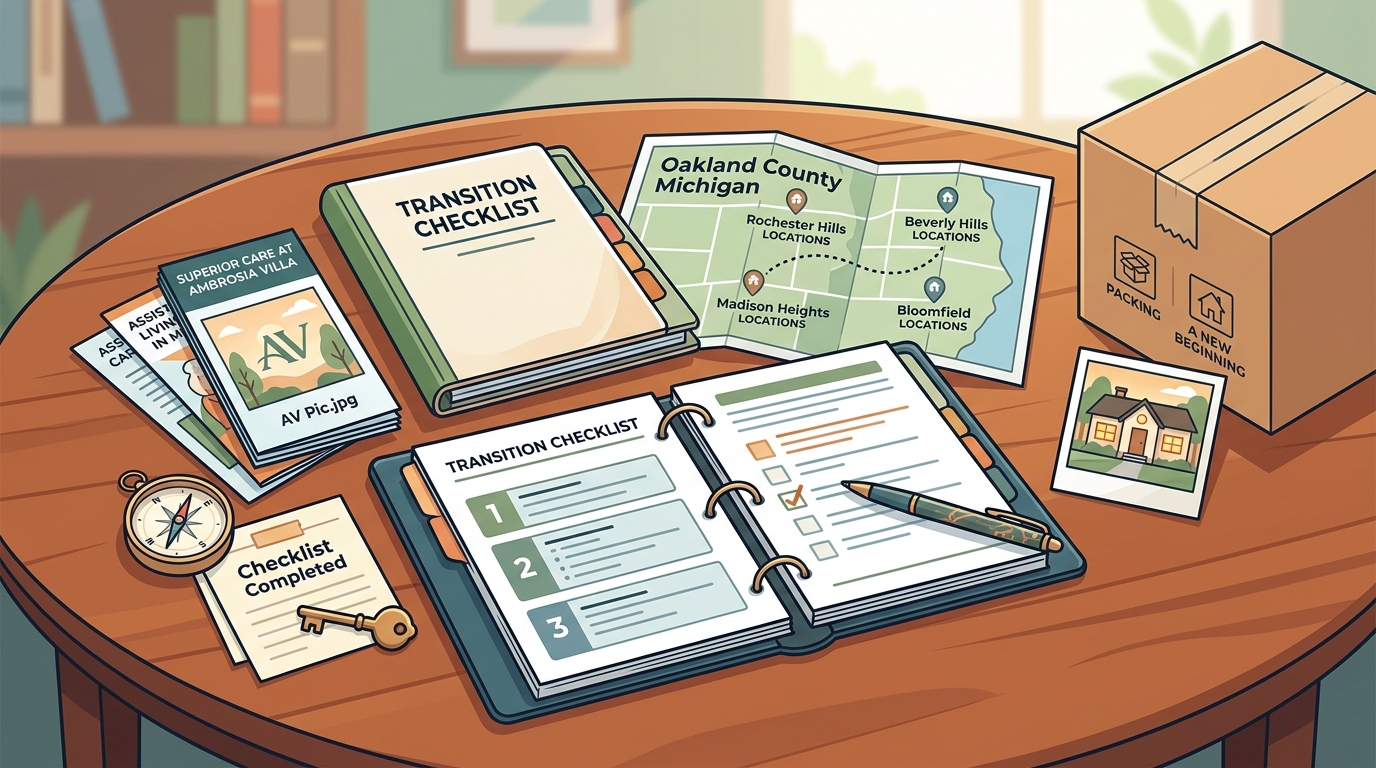
Step 5: Executing the Move
Once you have selected a facility, plan the move carefully. Involve your loved one in the process as much as possible. Let them choose which personal items to bring. Familiar objects provide comfort and reduce anxiety. Pack gradually over several weeks to avoid overwhelming them.
Coordinate the move with the facility staff. They can help with the logistics of arrival and initial setup. Ensure that all medical records and care plans are transferred accurately. This ensures continuity of care from day one. You can review their admission process details on their contact and locations page.
Step 6: Supporting Emotional Adjustment
The first few weeks after the move are critical. Your loved one may experience grief, anger, or denial. This is a normal part of the adjustment process. Visit frequently and consistently. Encourage participation in activities and social events. Help them build new friendships with other residents.
Communicate openly with the staff. They can provide updates on how your loved one is coping. If you notice signs of prolonged depression or withdrawal, address them immediately. Many facilities, such as those in Bloomfield Hills, offer specialized support for emotional well-being.
Key Takeaways
- Start Early: Do not wait for a crisis. Plan the transition while your loved one can participate in decisions.
- Prioritize Safety: Assess daily living challenges and safety risks before choosing a facility.
- Choose Small Homes: Small group homes with six residents or fewer offer better caregiver-to-resident ratios.
- Verify Costs: Seek all-inclusive pricing to avoid hidden fees and surprise bills.
- Tour In-Person: Observe staff interactions and resident engagement during facility visits.
- Support Emotionally: Help your loved one adjust by maintaining frequent contact and encouraging socialization.
- Use Local Resources: Leverage Michigan-specific care networks for trusted recommendations.
Frequently Asked Questions
What is the difference between assisted living and a nursing home?
Assisted living provides personal care and supervision in a residential setting. Nursing homes provide intensive medical care for those with severe health conditions. Assisted living is less clinical and more home-like.
How much does assisted living cost in Michigan?
Costs vary by location and level of care. Private pay is common, but some accept long-term care insurance. Contact facilities directly for accurate pricing.
Can my loved one bring personal furniture?
Yes, most facilities encourage bringing personal items to create a comfortable environment. Check with the specific facility for size and safety restrictions.
What if my loved one has dementia?
Specialized memory care units or homes are available. These facilities offer secure environments and staff trained in dementia care.
How do I know if a facility is reputable?
Check licensing, read reviews, and visit in person. Look for consistent staffing and positive family testimonials.
Is there a waiting list for assisted living?
Some facilities have waiting lists. It is best to apply early to secure a spot.
What services are included in the monthly fee?
Typically, the fee includes rent, meals, housekeeping, laundry, and personal care services. Verify the specific inclusions with each provider.
Ready to Find the Right Care for Your Loved One?
Transitioning a senior into care is a significant step, but it does not have to be overwhelming. By following these steps and choosing a reputable provider, you can ensure your loved one receives the best possible care. Ambrosia Villa offers compassionate, nurse-guided care in beautiful residential homes throughout Oakland County. With only six residents per home, we provide the personalized attention that families trust.
Contact us today to schedule a tour or discuss your specific needs. Call or text us at 248-207-6511 to learn more about our services in Bloomfield, Rochester Hills, Madison Heights, and Beverly Hills.