
Choosing the right living arrangement for an aging parent is one of the most difficult decisions a family will face. The distinction between independent living and memory care is not just about amenities; it is about safety, medical needs, and cognitive health. According to recent industry data, over 60% of seniors with Alzheimer's disease or other dementias will require some form of specialized care support, making the initial assessment critical for long-term well-being. This guide helps Oakland County families navigate these options to ensure their loved ones receive the appropriate level of support. (Assisted Living Michigan Schedule)
Defining Independent Living
Independent living is designed for seniors who are physically capable but may benefit from a community environment that reduces the burdens of home maintenance. Independent living is a housing option for active seniors who need minimal assistance with daily activities. Residents in these settings typically manage their own medications, meals, and personal hygiene with little to no professional oversight. (Ambrosia Villa Assisted Living)
For families in Bloomfield Hills or Rochester Hills, independent living communities often offer social clubs, transportation services, and housekeeping. The primary goal is to enhance social engagement and provide a worry-free lifestyle. However, these environments are not equipped to handle significant cognitive decline or complex medical needs. If a parent is still driving, cooking, and managing finances, independent living may be the first step in the continuum of care.
Many families initially consider this option to prevent isolation. Social connection is vital for mental health, and community-based living provides structured opportunities for interaction. Yet, the lack of 24-hour medical supervision means that any sudden health crisis requires external emergency response, which can be stressful for both the resident and the family.
Understanding Memory Care
Memory care is a specialized form of assisted living designed specifically for individuals with Alzheimer's disease, dementia, or other cognitive impairments. Memory care is a secure residential environment providing 24-hour supervision and specialized support for cognitive decline. Unlike independent living, memory care homes prioritize safety and structure to prevent wandering and manage behavioral changes.
In Oakland County, memory care units are often integrated into smaller, home-like settings rather than large institutional facilities. This approach helps reduce anxiety and confusion among residents. The environment is typically secured to prevent exits that could lead to danger, while still allowing for safe outdoor access. Staff members are trained in dementia-specific communication techniques and behavioral management.
The intensity of care in memory units addresses the unique challenges of cognitive loss. Residents may experience confusion about time and place, difficulty recognizing family members, or changes in sleep patterns. Memory care staff are equipped to handle these issues with patience and expertise, ensuring that the resident remains safe and comfortable. This level of care is essential when a parent can no longer live alone safely.
Key Differences in Care Models
Understanding the operational differences between these two models is crucial for making the right choice. The following table summarizes the core distinctions in service delivery, staffing, and environment.
| Feature | Independent Living | Memory Care |
|---|---|---|
| Supervision Level | Minimal, social-focused | 24/7 medical and safety supervision |
| Target Audience | Active seniors needing social engagement | Seniors with dementia or Alzheimer's |
| Staffing Ratio | Lower, administrative focus | High, direct care focus |
| Environment | Apartment-style or community homes | Secure, small-home residential setting |
| ADL Assistance | Optional or self-managed | Comprehensive and mandatory |
The staffing ratio is perhaps the most significant differentiator. In independent living, staff may be present during business hours to handle administrative tasks or organize activities. In contrast, memory care requires a high caregiver-to-resident ratio to ensure constant monitoring. For example, Ambrosia Villa maintains a ratio of two caregivers for every six residents, ensuring that each individual receives consistent, personalized attention. This consistency is vital for patients with dementia, who often become agitated by unfamiliar faces or changing routines.
Assessment Guide for Families
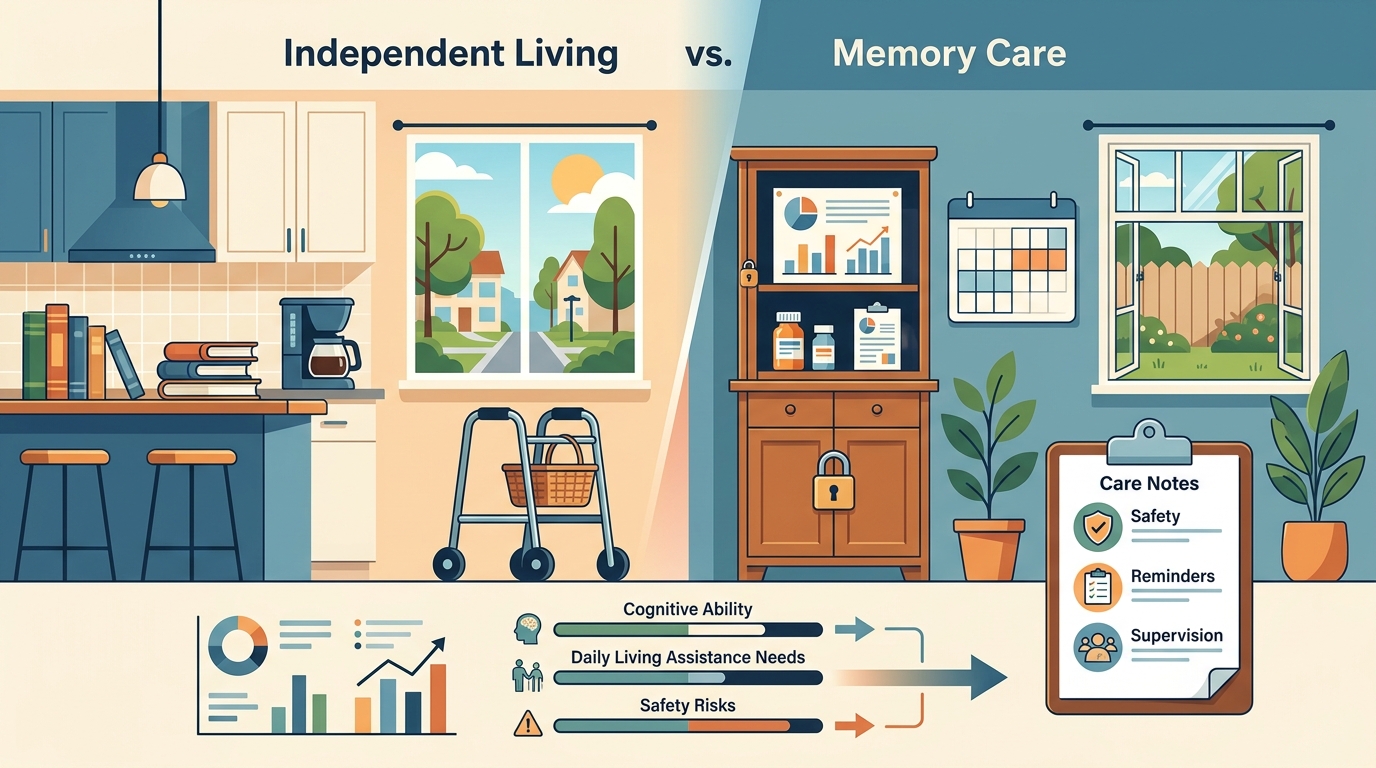
Determining the appropriate level of care requires an honest assessment of your parent's current capabilities. Look for specific red flags that indicate a transition from independent living to memory care is necessary. These signs often emerge gradually, making early detection important for a smooth transition.
1. Safety and Wandering Risks
If your parent has begun to wander or has gotten lost in familiar neighborhoods, independent living is no longer safe. Wandering is a common symptom of dementia that can lead to life-threatening situations. Memory care units are designed with secured perimeters to prevent this risk. According to the Alzheimer's Association, wandering is a significant safety concern that requires specialized environmental controls.
2. Medication Management
Can your parent manage their own medications accurately? Forgetting doses or taking incorrect amounts is a serious health risk. Memory care staff handle all medication administration, ensuring compliance and monitoring for side effects. Independent living residents are expected to manage this themselves or hire private help, which is often unsustainable.
3. Daily Living Activities (ADLs)
Observe their ability to perform basic tasks such as bathing, dressing, and toileting. If your parent needs assistance with more than two of these activities, they likely require assisted living or memory care. Independent living communities are not equipped to provide hands-on physical assistance. The decline in ADL capability is often the first indicator that a higher level of care is needed.
4. Cognitive Decline and Confusion
Significant memory loss, confusion about time or place, and difficulty with communication are hallmarks of dementia. If these symptoms are progressing, memory care provides the structured environment necessary to support cognitive function. Cognitive decline is a progressive condition requiring specialized therapeutic interventions. Without proper support, confusion can lead to increased anxiety and behavioral issues.
The Ambrosia Villa Approach
Ambrosia Villa offers a unique model that bridges the gap between traditional assisted living and specialized memory care. Located in Beverly Hills, Bloomfield Hills, Madison Heights, and Rochester Hills, these homes provide a residential setting that feels like home rather than a facility. Residential care homes provide a family-style environment that reduces institutional stigma.
With only six residents per home, Ambrosia Villa ensures that caregivers can build meaningful relationships with each resident. This consistency is particularly beneficial for those with Alzheimer's disease. Long-tenured staff members understand the unique needs of each individual, providing stability that is often missing in larger facilities. This approach aligns with best practices in geriatric care, which emphasize the importance of continuity in caregiving.
The homes are licensed as small group homes for the elderly, allowing for a high degree of personalized care. Services include assistance with all daily living activities, medication management, and nutritious home-cooked meals. The all-inclusive pricing model removes the financial ambiguity that often stresses families during difficult times. There are no hidden charges or surprise bills, providing peace of mind for both the resident and their family.
Families in Oakland County often choose Ambrosia Villa for its compassionate staff and specialized dementia care. The homes are designed to be safe and secure, yet warm and inviting. Common areas encourage social interaction, while private rooms offer a sanctuary for rest. The focus is on dignity, respect, and maintaining the resident's quality of life.
Key Takeaways
- Independent living is suitable for active seniors who need minimal assistance and primarily seek social engagement.
- Memory care is essential for individuals with Alzheimer's or dementia who require 24-hour supervision and specialized support.
- Safety risks such as wandering and medication mismanagement are key indicators that independent living is no longer appropriate.
- Ambrosia Villa operates four locations in Oakland County, including Beverly Hills and Bloomfield Hills, serving up to six residents per home.
- Consistency in caregiving is critical for dementia patients, and Ambrosia Villa maintains long-tenured staff to ensure this stability.
- All-inclusive pricing at Ambrosia Villa covers care, meals, and amenities, eliminating hidden costs for families.
- Early assessment of cognitive and physical decline can help families transition to memory care before a crisis occurs.
Frequently Asked Questions
What is the primary difference between independent living and memory care?
Independent living is for active seniors who need minimal help, while memory care provides 24-hour supervision and specialized support for those with dementia or Alzheimer's disease.
Can a resident move from independent living to memory care?
Yes, many seniors transition between levels of care as their needs change. However, Ambrosia Villa's model allows for specialized memory care within a residential home setting from the start.
How many residents are in an Ambrosia Villa home?
Each Ambrosia Villa home accommodates only six residents, ensuring a high caregiver-to-resident ratio and personalized attention.
Does Ambrosia Villa accept long-term care insurance?
Ambrosia Villa is a private pay community but works with all long-term care insurance providers and veteran's benefit programs to assist families with payment options.
What locations does Ambrosia Villa serve in Oakland County?
Ambrosia Villa has homes in Beverly Hills, Bloomfield Hills, Madison Heights, and Rochester Hills, Michigan.
Is memory care secure for residents who wander?
Yes, memory care units are designed with secured perimeters and safe outdoor access to prevent wandering while allowing for fresh air and activity.
What daily activities are covered in memory care?
Memory care includes assistance with bathing, dressing, toileting, eating, grooming, medication management, and housekeeping services.
Contact Us
If you are struggling to determine the right care option for your loved one, Ambrosia Villa is here to help. Our team offers personalized guidance and tours of our facilities to help you make an informed decision. We serve families across Oakland County with compassion and expertise.
Call or text us today at 248-207-6511 to schedule a visit. You can also email us at victoriasvetc@aol.com for more information. Visit our About Us page to learn more about our mission and team. Explore our Beverly Hills location or our Bloomfield Hills location to see how we can support your family.