

Transitioning a Senior to Assisted Living in Michigan: A Step-by-Step Guide
Moving a loved one into a senior care facility is one of the most difficult decisions a family can face. According to recent demographic data, the number of Americans aged 65 and older is projected to double by 2050, creating an unprecedented demand for quality senior care options across the United States. This surge in demand highlights the critical need for families to understand the specific pathways available in Michigan, particularly the distinction between large institutional nursing homes and smaller, more intimate assisted living environments. Many families in Oakland County and surrounding areas are increasingly seeking alternatives that offer the dignity of a home setting rather than the clinical atmosphere of traditional hospitals. (Navigating the Transition) (Assisted Living Michigan Schedule)
Step 1: Assessing Care Needs and Safety
The first and most crucial step is an honest evaluation of your senior's current health and safety. You must determine if they can still live independently or if they require assistance with Activities of Daily Living (ADLs). These activities include bathing, dressing, toileting, transferring (moving from bed to chair), eating, and continence. If your loved one is struggling with any of these tasks, it is time to consider professional care.
Assistive Living is defined as a residential living arrangement that provides assistance with daily activities and health-related services for people who are unable to live alone. This model is distinct from nursing homes, which provide 24-hour skilled nursing care. For many seniors in Michigan, the transition to assisted living is less about medical necessity and more about safety, social engagement, and peace of mind for the family. (Aging Community Living)
Consider the following indicators that it is time to move:
- Frequent falls or mobility issues.
- Neglect of personal hygiene or home maintenance.
- Memory loss or early-stage dementia requiring supervision.
- Social isolation or loneliness.
Step 2: Understanding Michigan Care Options
Michigan offers a variety of senior care models. It is vital to understand the difference between a nursing home, an assisted living facility, and an Adult Foster Care (AFC) home. Adult Foster Care is defined as a residential care model where a licensed provider offers room, board, and personal care services to no more than six unrelated individuals in a private home setting.
Small group homes, such as those found in Oakland County, often provide a more personalized experience than large institutional facilities. These homes typically house only six residents, allowing for a higher caregiver-to-resident ratio. This model ensures that each resident receives consistent, individualized attention. For families in Bloomfield Hills, Rochester Hills, Madison Heights, and Beverly Hills, these small group homes offer a seamless blend of professional care and home-like comfort.
When evaluating options, consider the following comparison:
| Feature | Small Group Home (AFC) | Large Assisted Living Facility | Nursing Home |
|---|---|---|---|
| Resident Capacity | 6 residents max | 50 to 200+ residents | Varies by license |
| Environment | Private home setting | Institutional or resort-style | Clinical/Hospital-like |
| Caregiver Ratio | High (e.g., 2:6) | Variable | Strictly regulated |
| Privacy | High | Moderate | Low |
Step 3: Navigating Finances and Insurance
Cost is a significant factor in the decision-making process. In Michigan, long-term care costs vary by region and level of care. According to recent industry reports, the average monthly cost for assisted living in Michigan is significantly lower than that of a nursing home, making it a financially viable option for many families. However, it is essential to understand what is included in the monthly fee.
Many premium assisted living homes in Michigan operate on an all-inclusive pricing model. This means that rent, utilities, cable, phone, three home-cooked meals daily, snacks, housekeeping, laundry, and personal care services are bundled into one transparent monthly fee. There are no hidden charges or surprise bills. This predictability is a major advantage over other care models where additional services may incur extra costs.
Payment sources typically include:
- Private Pay: Using personal savings, pensions, or retirement funds.
- Long-Term Care Insurance: Many policies cover assisted living costs if specific criteria are met.
- Veterans Benefits: The Aid and Attendance benefit can help eligible veterans and their spouses pay for care.
- Medicaid Waivers: Michigan's Home and Community-Based Services (HCBS) waivers may cover costs for eligible individuals, though waitlists can be long.
It is crucial to verify insurance coverage early in the process. Contact your provider directly to understand your benefits and any required pre-authorizations.
Step 4: Touring and Selecting a Facility
Once you have assessed needs and finances, begin touring potential facilities. In Oakland County, communities like Beverly Hills, Bloomfield Hills, Rochester Hills, and Madison Heights offer numerous options. When touring, look for the following:
- Atmosphere: Does the home feel warm and inviting? Do residents seem engaged and happy?
- Staff Interaction: Observe how staff members interact with residents. Are they patient, respectful, and attentive?
- Staffing Levels: Ask about the caregiver-to-resident ratio. A high ratio ensures that your loved one receives adequate attention.
- Activities: Review the activity calendar. Engaging activities are essential for mental and physical well-being.
- Medical Support: Inquire about visiting doctors, nurses, physical therapists, and hospice care availability.
At Ambrosia Villa, for example, we pride ourselves on providing a real home environment with only six residents per home. This allows for consistent care and deep relationships between staff and residents. We offer specialized memory care for those with Alzheimer's or dementia, ensuring that their unique needs are met with compassion and expertise.
Step 5: Executing the Move
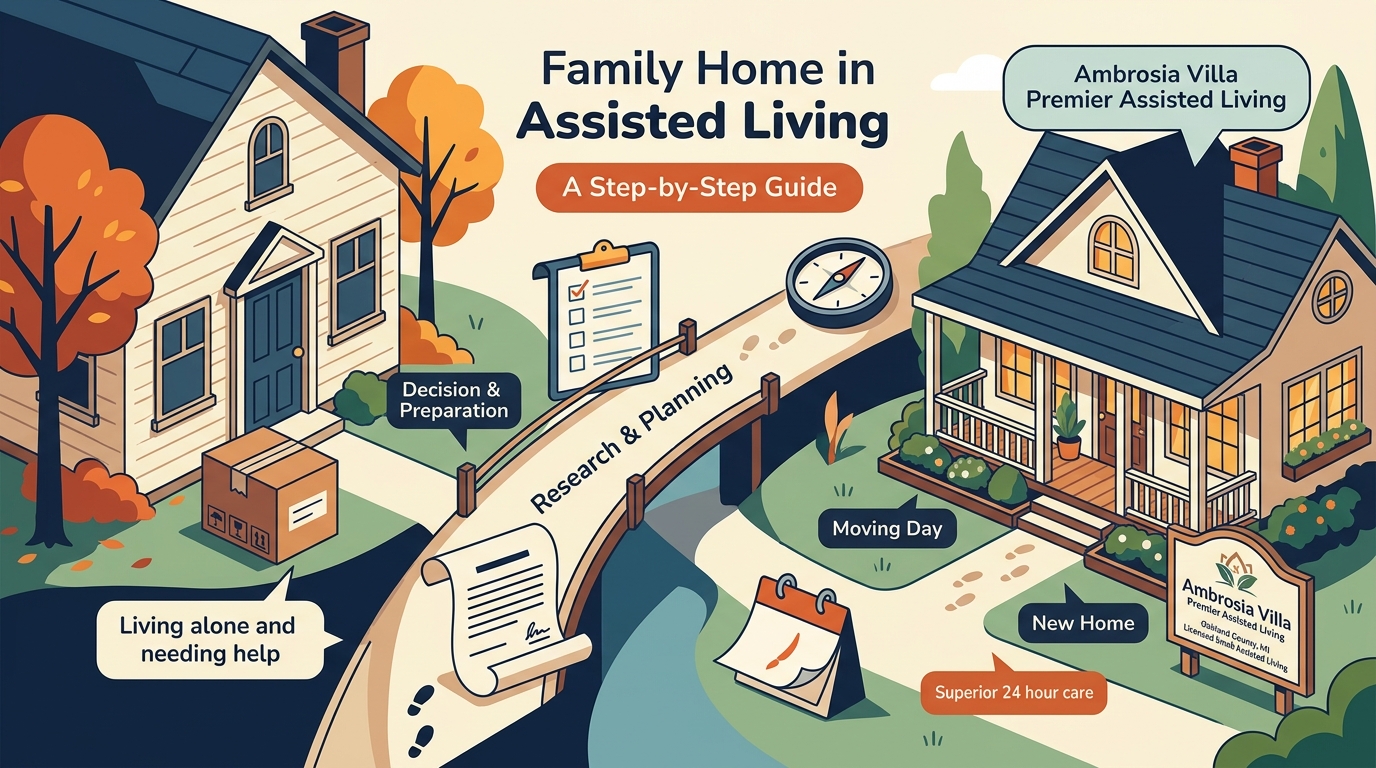
The final step is the actual move. This process should be handled with sensitivity and care. Start by involving your loved one in the decision-making process as much as possible. Let them choose which personal items to bring. Pack gradually to avoid overwhelming them. On moving day, ensure that familiar items like photos, blankets, and favorite chairs are present to create a sense of continuity.
Communicate openly with the new care team. Provide them with detailed information about your loved one's routines, preferences, medical history, and personal history. This information helps the staff build a personalized care plan that respects your loved one's identity and habits.
Finally, stay involved. Visit frequently in the early days to help your loved one adjust. Monitor their well-being and communicate any concerns to the facility management. A successful transition is a collaborative effort between the family, the senior, and the care providers.
Frequently Asked Questions
What is the difference between assisted living and a nursing home?
Assisted living provides personal care and support in a home-like setting for seniors who can still live semi-independently. Nursing homes provide 24-hour skilled nursing care for individuals with complex medical needs. Assisted living focuses on lifestyle and support, while nursing homes focus on medical treatment.
How much does assisted living cost in Michigan?
Costs vary by location and level of care. In Oakland County, prices depend on whether you choose a private or shared room and the intensity of care required. Many facilities offer all-inclusive pricing that covers meals, activities, and personal care.
Does Medicaid cover assisted living in Michigan?
Traditional Medicaid does not typically cover assisted living. However, Michigan's HCBS waivers may cover costs for eligible individuals who meet specific income and asset criteria. It is best to consult with a local elder law attorney or the facility's admissions team.
Can my loved one receive memory care in a small group home?
Yes, many small group homes in Michigan, including those in Beverly Hills and Bloomfield Hills, offer specialized memory care programs. These programs are designed to support residents with Alzheimer's and dementia through structured activities and secure environments.
What should I look for when touring a facility?
Look for cleanliness, staff responsiveness, resident engagement, and the overall atmosphere. Ask about staffing ratios, emergency procedures, and the types of activities offered. Trust your instincts about whether the home feels like a place your loved one would enjoy.
How do I pay for assisted living?
Common payment methods include private pay (savings, pensions), long-term care insurance, veterans benefits, and Medicaid waivers. Each facility can provide detailed information about accepted payment methods and financial assistance options.
Is it better to move a senior to a facility or bring in home care?
This depends on the senior's needs and family resources. Home care can be expensive for 24/7 support and may not provide the social engagement and safety monitoring that a facility offers. Assisted living provides a community environment and professional care that can be more sustainable for many families.
Ready to Explore Your Options?
Transitioning a senior into care is a significant step, but it does not have to be overwhelming. By understanding your options, assessing needs carefully, and choosing the right environment, you can ensure your loved one receives the compassionate care they deserve. Ambrosia Villa offers premier assisted living in Beverly Hills, Bloomfield Hills, Rochester Hills, and Madison Heights. We invite you to tour our homes and experience the difference that small-group, personalized care can make. Contact us today at 248-207-6511 to schedule a visit and learn more about our all-inclusive care plans.