
Choosing the right living arrangement for an aging parent is one of the most complex decisions a family will face. The distinction between independent living and memory care is not just about amenities; it is about safety, medical necessity, and the specific cognitive capabilities of the individual. According to the Alzheimer's Association, approximately 6.7 million Americans aged 65 and older are living with Alzheimer's dementia in 2023, a number projected to grow significantly by 2050. This statistic highlights the critical need for families to accurately assess cognitive decline versus physical frailty. Misidentifying the need for specialized care can lead to unsafe environments for the senior and overwhelming stress for the family. This guide clarifies the operational differences between these care models, specifically within the context of Oakland County, Michigan, to help you navigate this transition with confidence. (Assisted Living Michigan Schedule)
Understanding Independent Living Communities
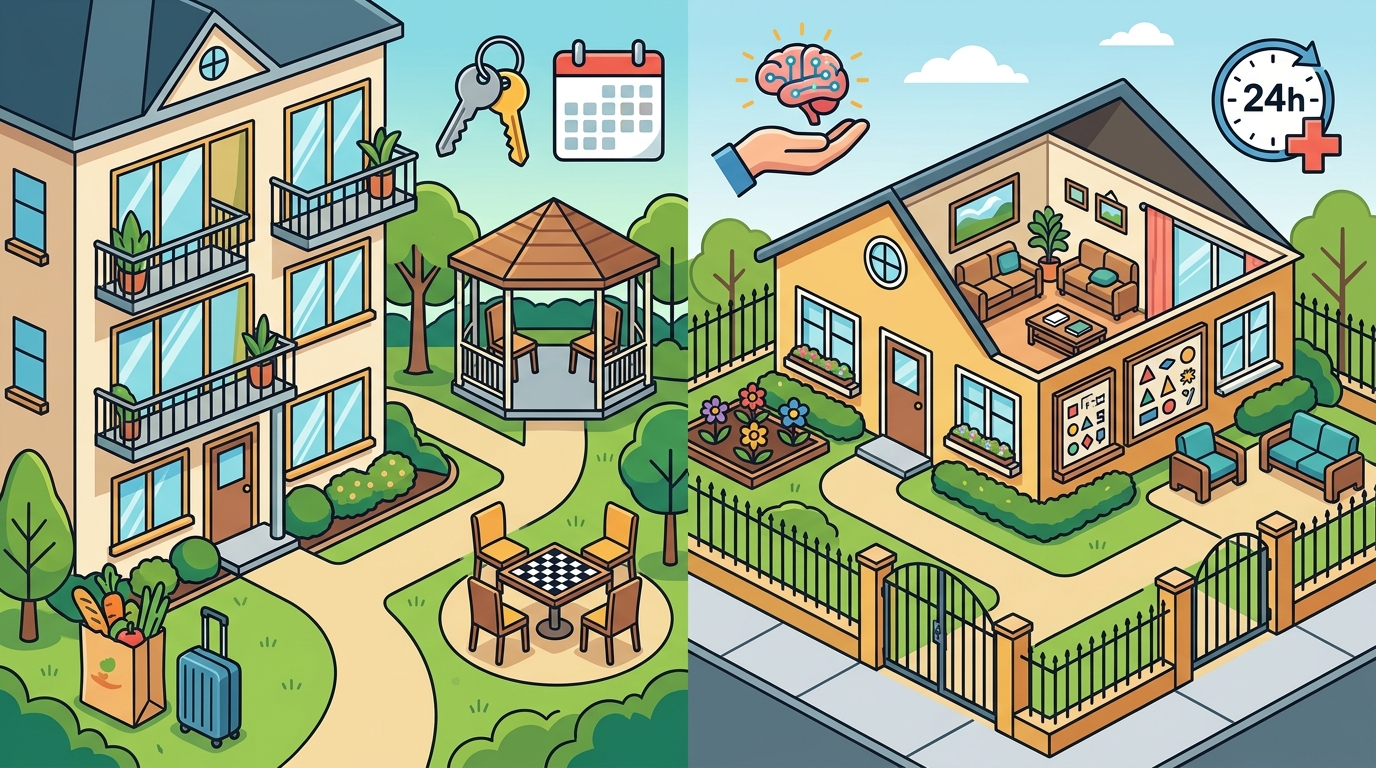
Independent living communities are designed for seniors who are physically capable of managing their daily activities but wish to reduce the burdens of home maintenance and social isolation. These environments prioritize lifestyle, convenience, and community engagement over medical intervention. Residents typically have their own private apartments or cottages and enjoy access to communal dining, transportation, and recreational activities. (Blog)
The primary goal of independent living is to promote autonomy. Seniors in these settings can come and go as they please, maintaining their independence while having support available if needed. This model is ideal for active seniors who are still cognitively sharp but are finding it difficult to manage household chores, cooking, or home repairs. It serves as a transitional step for those who are not yet ready for assisted living but no longer wish to maintain a large family home. (Bloomfield Michigan Ambrosia Villa)
For families in Oakland County, independent living offers a way to stay close to loved ones while providing them with a vibrant social calendar. However, it is crucial to recognize that independent living staff are not trained to handle significant cognitive decline or wandering behaviors. If a parent requires 24-hour supervision or assistance with basic daily tasks, this setting may no longer be appropriate.
Recognizing the Need for Memory Care
Memory care is a specialized form of assisted living designed specifically for individuals with Alzheimer's disease, dementia, or other cognitive impairments. The defining characteristic of memory care is the structured environment and the specialized training of the staff. Unlike independent living, memory care units are secured to prevent wandering, a common and dangerous behavior associated with dementia.
When determining if a parent needs memory care, look for specific behavioral changes. These include getting lost in familiar places, repeating questions or stories, difficulty recognizing family members, and significant changes in sleep patterns. According to the National Institute on Aging, dementia affects the brain's ability to process information, leading to a gradual loss of independence. When this loss becomes severe enough to compromise safety, memory care becomes necessary.
Memory care homes provide a higher level of personal assistance. Staff members are trained to assist with all activities of daily living (ADLs), including bathing, dressing, grooming, and toileting. They also manage complex medication schedules and provide therapeutic activities designed to stimulate cognitive function and reduce anxiety. The environment is typically smaller and more residential, aiming to reduce overstimulation and create a calming atmosphere.
Key Differences: A Side-by-Side Comparison
Understanding the operational differences between these two care models is essential for making the right choice. The table below outlines the core distinctions in staffing, environment, and care focus.
| Feature | Independent Living | Memory Care |
|---|---|---|
| Target Audience | Active seniors needing minimal assistance | Seniors with dementia or Alzheimer's |
| Staffing Ratio | Lower staff-to-resident ratio | High staff-to-resident ratio (e.g., 2:6) |
| Supervision | 24-hour security, but not constant care | 24-hour direct supervision and monitoring |
| Environment | Apartment-style, open community | Secured, small-group home setting |
| ADL Assistance | Optional or limited | Comprehensive assistance with all ADLs |
| Cost Structure | Lower monthly fee, utilities often included | Higher monthly fee due to specialized care |
The most critical differentiator is the level of cognitive support. Independent living assumes the resident can make safe decisions. Memory care assumes the resident needs guidance and protection from environmental hazards. If your parent is exhibiting signs of confusion or forgetfulness that impact their safety, the scale tips toward memory care.
The Ambrosia Villa Small Group Home Model
Ambrosia Villa offers a unique alternative to both traditional large-scale independent living complexes and institutional memory care facilities. Operating since 2006, Ambrosia Villa provides small group homes for the elderly in Oakland County, Michigan. The model is built on the philosophy that a home-like environment reduces stress and improves quality of life for seniors.
Each Ambrosia Villa location houses only six residents. This low ratio ensures that caregivers can provide consistent, personalized attention. In a large facility, a senior with dementia might be one of hundreds of residents, leading to feelings of anonymity and neglect. At Ambrosia Villa, the small group size allows staff to build deep, trusting relationships with each resident. This consistency is vital for individuals with memory loss, as familiar faces provide a sense of security.
The homes are licensed as small group homes for the elderly or adult foster care homes. This licensing allows them to provide a full spectrum of care, from assisted living to specialized memory care, under one roof. This flexibility means that as a parent's needs change, they can transition within the same community without having to move to a completely different facility. The locations in Beverly Hills, Bloomfield Hills, Madison Heights, and Rochester Hills serve as prime examples of this integrated care approach.
Furthermore, Ambrosia Villa includes all services in one transparent monthly fee. This includes three home-cooked meals, snacks, housekeeping, laundry, and medication management. There are no hidden charges or surprise bills. This all-inclusive model simplifies financial planning for families and ensures that the resident's well-being is never compromised by cost concerns.
Financial Considerations and Insurance
The cost of senior care varies widely based on the level of care required. Independent living is generally the most affordable option, followed by assisted living, with memory care being the most expensive due to the intensive staffing and security requirements. However, the value proposition of small group homes like Ambrosia Villa often outweighs the higher cost of large facilities when considering the quality of care.
For memory care, families often look to long-term care insurance or veterans' benefits. Ambrosia Villa is a private pay community that gladly works with all long-term care insurance providers and veteran's benefit programs. Rates are based on the level of care needed and whether the resident chooses a private or shared room. It is important to consult with a financial advisor or insurance provider to understand coverage limits and out-of-pocket responsibilities.
When evaluating costs, consider the hidden costs of home care. Hiring private caregivers for 24-hour support can exceed the cost of facility-based care. Additionally, the emotional toll on family members who act as primary caregivers is significant. Moving a parent to a professional care setting can alleviate this burden, allowing family relationships to remain positive and focused on connection rather than care tasks.
Key Takeaways
- Cognitive Assessment is Key: If your parent is forgetting medications, getting lost, or exhibiting wandering behaviors, memory care is likely necessary.
- Small Group Homes Offer Consistency: Ambrosia Villa's model of six residents per home ensures higher caregiver-to-resident ratios than large facilities.
- All-Inclusive Pricing: Ambrosia Villa includes meals, housekeeping, and care in one transparent monthly fee, with no hidden charges.
- Flexible Care Levels: Small group homes can provide both assisted living and memory care, allowing for seamless transitions as needs change.
- Location Matters: Ambrosia Villa operates in Beverly Hills, Bloomfield Hills, Madison Heights, and Rochester Hills, serving the broader Oakland County area.
- Insurance Support: The facility works with long-term care insurance and veteran's benefits to help manage costs.
- Proactive Planning: Assessing care needs early can prevent crises and allow for a smoother transition into senior living.
Frequently Asked Questions
What is the main difference between independent living and memory care?
Independent living is for active seniors who need minimal assistance and want to maintain their autonomy. Memory care is for seniors with cognitive impairments who require 24-hour supervision, security, and assistance with daily activities.
Can a senior move from independent living to memory care?
Yes, but it often requires a move to a different facility or a specialized unit within a larger campus. Ambrosia Villa's small group home model allows for transitions between care levels within the same community, reducing the stress of relocation.
How does Ambrosia Villa handle dementia patients?
Ambrosia Villa provides specialized memory care in a home-like setting. With only six residents per home, staff can provide personalized attention and manage behavioral challenges effectively. The environment is designed to be calming and secure.
Is Ambrosia Villa licensed for memory care?
Yes, Ambrosia Villa is licensed by the State of Michigan as a small group home for the elderly and adult foster care homes, which permits the provision of specialized care for residents with dementia.
What areas does Ambrosia Villa serve?
Ambrosia Villa serves families in Oakland County, Michigan, with locations in Beverly Hills, Bloomfield Hills, Madison Heights, and Rochester Hills.
Does Ambrosia Villa accept veterans benefits?
Yes, Ambrosia Villa works with all long-term care insurance providers and veteran's benefit programs to help families manage the cost of care.
How many residents are in each Ambrosia Villa home?
Each Ambrosia Villa home houses only six residents. This small group size ensures a high caregiver-to-resident ratio, typically two caregivers for every six residents.
Contact Us for a Tour
Deciding between independent living and memory care is a significant step. At Ambrosia Villa, we invite you to see the difference for yourself. Our small group homes offer a compassionate, professional alternative to large care facilities. We provide personalized care plans, nutritious meals, and a warm, home-like environment for your loved one.
Call or text us today at 248-207-6511 to schedule a tour of our Beverly Hills, Bloomfield Hills, Madison Heights, or Rochester Hills locations. Let us help you find the right path for your family's needs.